Assault in 1900 vs 1920
In 1873, the crime of assault was defined by the Washington State Legislature as “an attempt in a rude, insolent and angry manner, unlawfully to touch, strike, beat, or wound another person.” Most assaults fell into this category, which resulted in a maximum fine of $500 or six months in jail. More serious cases of assault were defined further, as assault with the intent to kill, rape, sodomize, or rob carried with it a prison sentence of 1-14 years. Assault and battery (beating) was also a separate offense, which was met with a maximum $1000 fine or one year in jail. By 1900, these fairly broad laws were still being used to prosecute individuals for assault.
During the 11th regular session of the Washington State Legislature, different degrees of assault were introduced to the state’s legal code. As of 1909, first-degree assault applied to any assault performed with the intent to kill another, with a deadly weapon (such as a firearm), or poisoning with a potentially lethal substance. The punishment for first-degree assault was a minimum sentence of five years in prison, raised from the one-year minimum in the 1873 statute. A second-degree assault was defined similarly to the general assault charge from 1873 and encompasses any act that intends to injure or cause bodily harm. Third-degree assault serves as a catch-all for minor instances of assault that do not fit the circumstances of the prior two categories. These crimes were prosecuted as misdemeanor offenses. Twelve of the cases considered in this project mention different degrees of assault, and all were published during the latter end of the 1900-1920 rage after the 1909 changes were implemented.
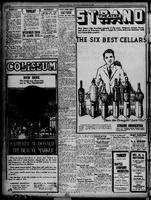
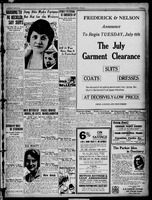
The below pages contain two articles, one describes the serious and potentially fatal circumstances surrounding a charge of first-degree assault (“Assault Charge for Shooting Shoemaker,” 1920), while the other describes the relatively inconsequential circumstances surrounding a charge of third-degree/misdemeanor assault (“WAS BITTEN BY NURSS, HE SAYS,” 1920).