Gender & Assault
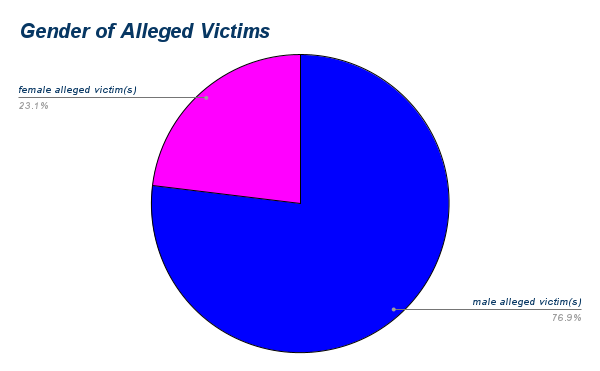
The majority of assault cases in The Seattle Star from 1900-1920 involved both male victims and male offenders, with women consisting of less than a quarter of both categories respectively. Regarding victims, three-quarters (30/40 cases) were male. Only 9 cases involved female victims, and in one case the victim’s gender was not specified. This is consistent with the historiography of assault in New York City from 1860-1880 (Pamela Haag, "'The Ill-Use of a Wife:' Patterns of Working-Class Violence in Domestic and Public New York City, 1860-1880," Journal of Social History 25, 3 (1992): 695-698), which suggests that assault among men is three times more frequent than male assault of women. Assault among men was by far the most prevalent in Seattle from 1900-1920 as well, being featured in 25 out of 40 cases. The NYC trend of assault among young men was also present in Seattle but not as dominant, being featured in only five articles. Assaults with male perpetrators frequently occurred in public spaces and commonly involved alcohol (5 cases, more commonly at the beginning of the period), fighting (6 cases), and the harassment of women (3 cases). Conversely, cases with female perpetrators most commonly occurred in private spaces. One case of assault with a female offender involved a prostitute, adhering to a trend of female prostitute offenders also found in Kansas City from 1890-1920 (Donna Cooper Graves, “‘WE’LL FIGHT IT OUT FAIR RIGHT NOW’ Homicide, Felony Assault, and Gender in Kansas City, Kansas 1890-1920.” Kansas History 26, 1 (2003): 32).
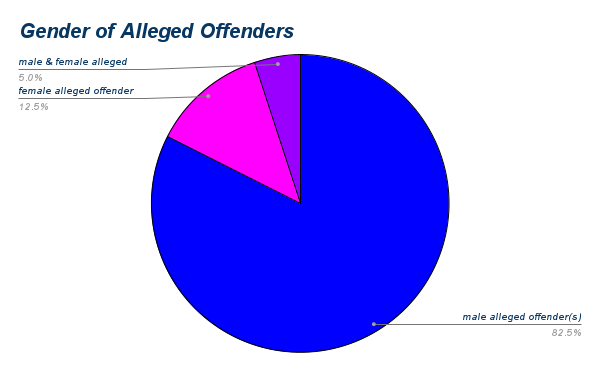
Seven articles featured male offenders with female victims, and three articles featured the opposite dynamic. Only two cases feature both female offenders and female victims, and two more cases feature multiple offenders or victims of different genders (i.e. husband and wife). Considering the fact that nine cases had multiple victims and/or perpetrators, the 40 cases featured 7 female offenders and 46 male offenders. Two male/female pairs of offenders were present. There was no clear gender-based pattern over time, as men remained the majority of offenders and victims into 1920, and female involvement in cases remained consistent. There was also no present gender-based trend of weapon use.