Language in the Stories
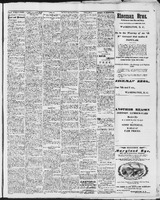
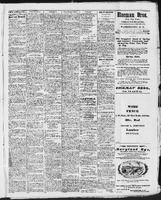
The language used in the stories varied significantly depending on the section it was included in or if the story was given its own headline. Cases that were found in the "Circuit Court" section of the paper could have as few as 21 words about the case up to 117 words when discussing multiple cases. Cases found in the "Local and Personal" section had the most variation in terms of story size, ranging from 43 words, all the way to 219 depending on how much detail was available, and the severity of the crime. The crimes that got the most coverage were the most severe or high-profile, as they would have the most negative impact on the Maryland people, and their way of life. These cases would have their own headlines, and the story would be expanded upon in great detail, the largest of these cases contained a staggering, 673 words.
The story which contained 673 words is dicussing a man named Arthur Kemp, who embezzled over $10,000 from his work as a former chief and property clerk of the police department. (Arthur Kemp III) This embezzlement gained lots of attention, which resulted in two separate articles being written about his crime, as well as his condition even after being arrested. This situation is similar to one described by Katherine Unterman in her 2012 article, when she states, " But by 1885, the popular press had begun to publish frequent updates on the whereabouts, lifestyles, and financial conditions of American defaulters living in Canada. Typically, these lengthy features took up an entire page, bore enormous headlines, and profiled the exploits of upwards of twenty separate boodlers." (Unterman 2012) Saying that cases of embezzlement brought large amounts of attention and public interest in not just the cases but the alleged offenders as well, like what occurred with Mr. Kemp.
Unterman, Katherine. “Boodle over the Border: Embezzlement and the Crisis of International Mobility, 1880–1890.” The Journal of the Gilded Age and Progressive Era 11, no. 2 (2012): 151–89. https://doi-org.mutex.gmu.edu/10.1017/S1537781412000011.