
Postwar Life
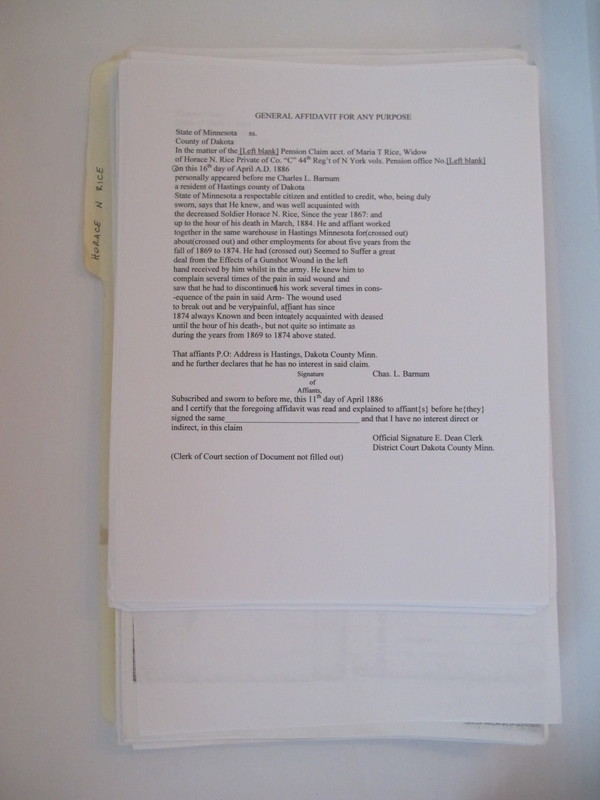
After the war, soldiers needed to return to their previous lives or begin anew. Some returned to the occupations they had held before the war and others began a new trade. Before the war, Horace was a farmer, and after the war he worked in a warehouse and later became a clerk.
Warehouse work is classified as manual labor. Horace was among 7.5% of Union soldiers who had that type of occupation. Other occupations soldiers held after the war included farming (24.7%), artisan (8.5%), professional (10.8%), other (7.9%), and unknown (40.5%). Working in a warehouse, then, was somewhat uncommon.
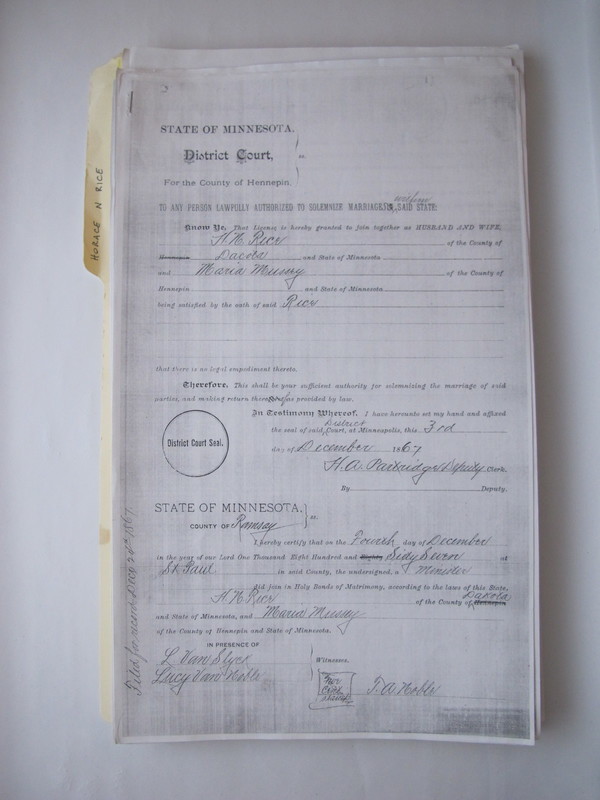
Many soldiers got married after the war. Roughly 73% of the soldiers got married after returning home, as did Horace. Some soldiers who had been married before the war lost their spouses while they were gone. Only 4% stayed single.
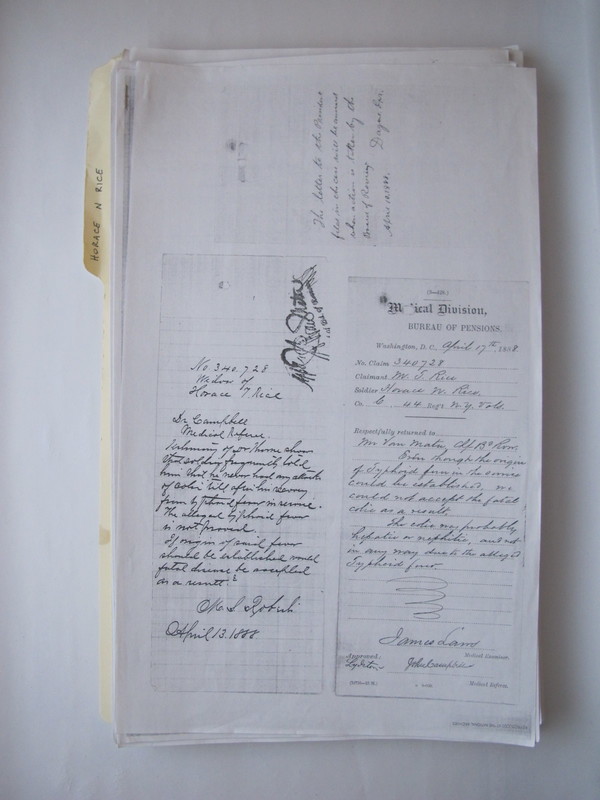
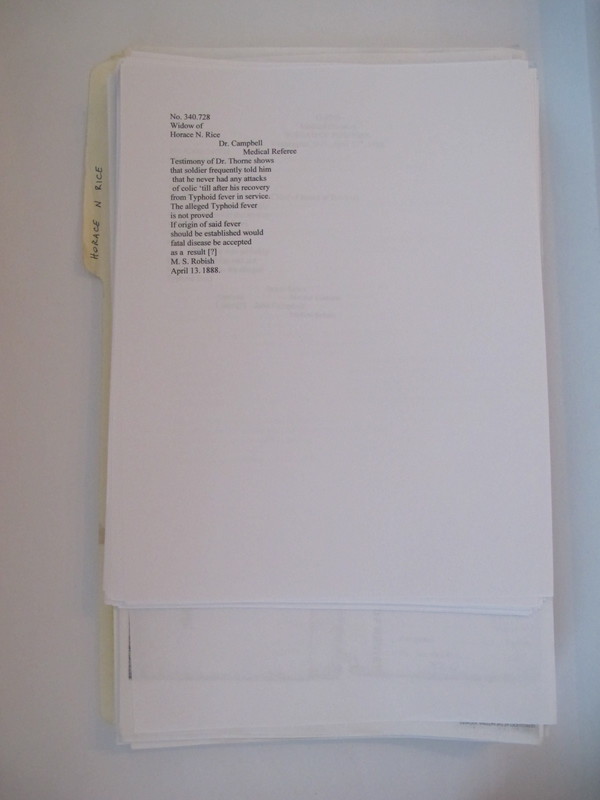
Soldiers commonly suffered from illnesses after the war. Many became ill in their old age as a result of their war experiences, such as injuries, malnutrition and location. A study performed by Dejun Su determined that occupation and birth season as well as the soldiers' early lives also played a role in their age and time of death. The disease Horace experienced in his postwar life was common among soldiers.
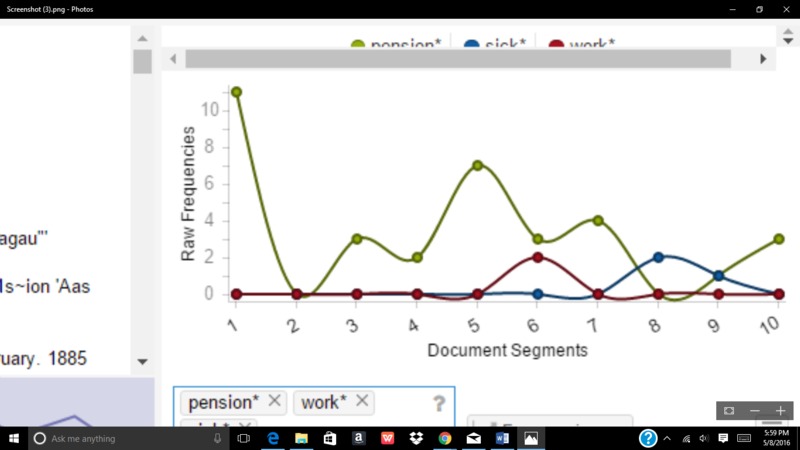
This text mining graph shows how often the words pension, sick, and work show up within Blenheim House's primary documents about Horace. These were the most common things that made up his life during his post war years.