
Browse Items (17 total)
Sort by:
Master Armorer's House
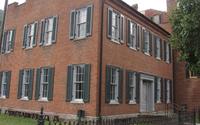
Completed in 1859, used as a headquarters. no details of graffiti (under plexiglass)
Lockwood House
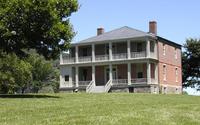
Constructed as the home of the Armory Paymaster in 1848, it became a hospital in 1862 and in 1863 headquarters for Gen. Lockwood and in 1864 for Gen. Sheridan. Graffiti discovered during preservation; no details.
Otto Farmhouse
A farm house built c1790. Used as a Union hospital during the battle of Antietam. Signature carved into 2nd story windowsill.
David Goff House
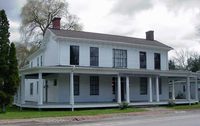
A five-bay Federal style "I" house built c1795. "The Federals had carved graffiti on the walls including the names and units of at least twenty-five soldiers, and that of a nurse, Mary Poughkeepsie of McKeesport, Pennsylvania. One eight-foot-long…
Stone House
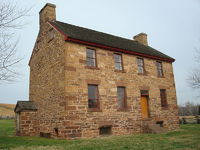
A two-storied house built c1849. Used as a hospital during the First and Second Battles of Manassas. Two members of the 5th New York Volunteer Infantry carved their names into the floorboards.
Riddick's Folly
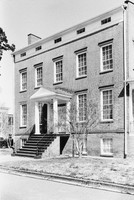
A Greek Revival style brick townhouse built in 1837. Used as a Union headquarters; graffiti is visible on the 3rd floor. According to Along Virginia's Route 58, the graffit includes signatures, "E Pluribus Union" written by Henry Van Week of the New…
Mayhurst Inn
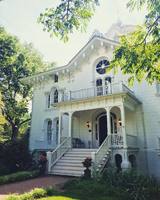
A four story Italianate home built in 1859 as a plantation house. Confederate signatures in the cupola, on the wall and scratched in the glass
Conway House
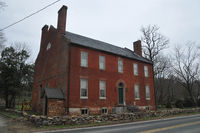
A Federal-style house built in 1807, occupied by Union soldiers. Stenciled signatures in the attic.
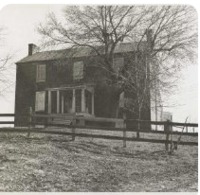
Braehead
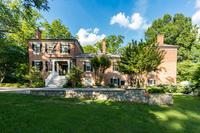
A Greek Revival mansion built in 1859. Union soldiers left graffiti in 1864. One signature remains, carved in a door frame. An additional signature found on the basement wall was photographed, but is no longer visible.
Belle Grove Plantation
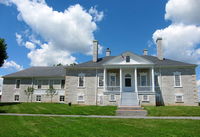
A mansion built in 1797 in the Classical Revival style, with graffiti signatures in the attic, added to after the Civil War
Arlington House
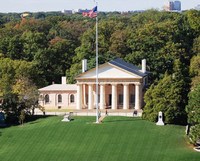
"At Arlington House, for example, a soldier named John Chapman of Company K, 28th Pennsylvania, carved his name and regiment high on a wooden beam in the mansion’s attic, along with the date 1862."
Linden Hall
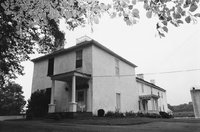
A house built around 1803. "The attic walls are covered with many signatures—three of them Confederate soldiers’ names with the date July 10, 1863, mute testimony to the stop General Robert E. Lee’s army made on the banks of the Potomac at…
Chatham Manor
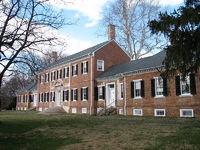
A grand Georgian-style house overlooking the Rappahannock River. Occupied by Union troops in 1862; used variously as headquarters, hospital, by soldiers on picket duty. "By the time the Civil War ended in 1865, Chatham was desolate. Blood stains…
Liberia House
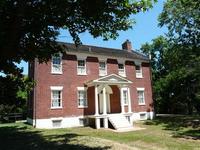
"Liberia served as Confederate General P.G.T. Beauregard’s
headquarters in 1861, when Confederate President
Jefferson Davis visited. In 1862, General Irvin McDowell
set up his headquarters in the house, when President
Lincoln visited. The house…
headquarters in 1861, when Confederate President
Jefferson Davis visited. In 1862, General Irvin McDowell
set up his headquarters in the house, when President
Lincoln visited. The house…
Ben Lomond Historic Site
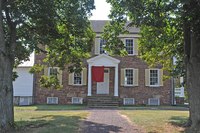
"Ben Lomond and its outbuildings were constructed for Benjamin Tasker Chinn in 1832. Confederate forces used Ben Lomond as a hospital following the 1861 Battle of First Manassas. Signatures of Federal soldiers who occupied the property in 1862 are…
Historic Blenheim and the Civil War Interpretive Center
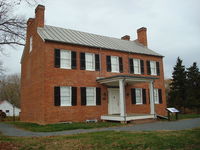
"Historic Blenheim is a c. 1859 central-hall plan Greek Revival-style brick farmhouse built by Albert Willcoxon just prior to the Civil War (1861-65). It is nationally significant for the voluminous quantity and quality of examples of Civil War…
Featured Item
Verification by a notary public that Horace's neighbor said he was in the room when Horace died, and verification of the legitimacy of the notary public
The witness is a Charles Houghtagling, a second neighbor of Horace's who was in the room when he died.