
A social act
"Joining in and adding to the graffiti may have been “a small ritual of belonging.”"
Unit names created a network of affiliations across the walls - with units representing not just a military identity, but state and local identities, as they were mustered in particular places. Multiple members of the same unit wrote on the same walls: at Blenheim House, there are signatures by 10 members of Company K of the 29th New York Infantry; 6 by Company B of the 83rd Pennsylvania Infantry; and 7 by Company C of the 4th New York Cavalry.
Katherine Reed
"Union soldiers’ signatures in Melrose Cave include an initial and a last name, like inscriptions of tourists in the previous generation. But soldiers’ inscriptions also often include demonstrations of common unit identity through an additional line including the inscriber’s state and regiment number."
More generally, graffiti was not isolated, but covered walls, creating a shared space to which soldiers added, often using dates to give their contributions a specific place in the writing.
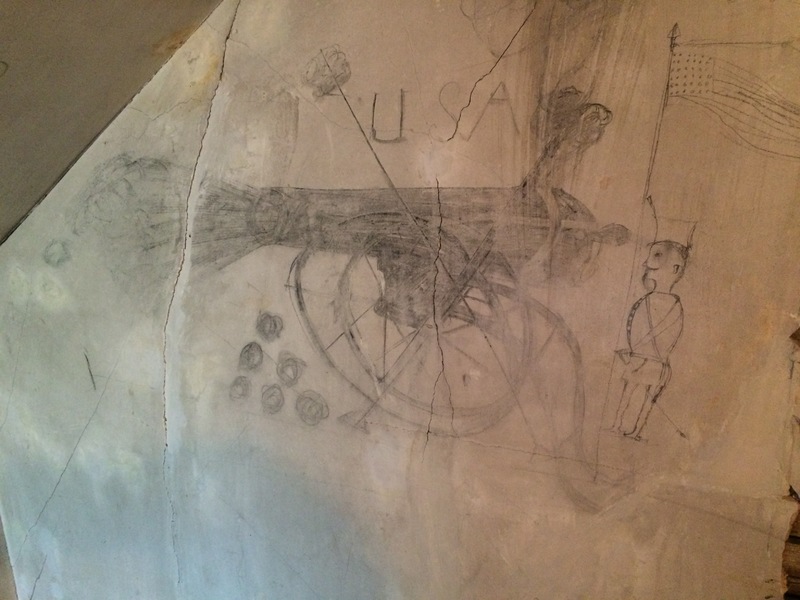
Katherine Reed also argues that military images can also be understood as reflecting a shared military experience that could extend to pride and bravado. Images of flags and a soldier standing next to firing cannon echo Union recruiting posters and the photographs for which soldiers posed.
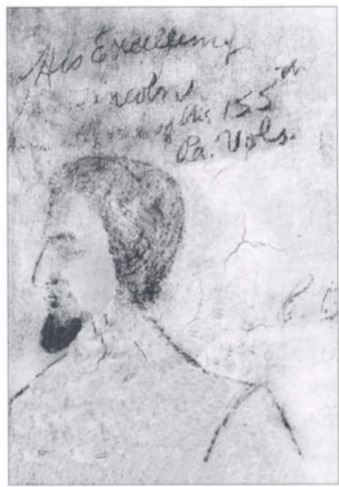
In the same way, images of Abraham Lincoln (at Landon House, and reportedly once visible at Melrose Caves) can be interpreted as representations of the leaders, and perhaps of the cause for which the men fought. At Landon House that interpretation is buttressed by accounts describing the graffiti as a response to what Confederates had drawn on the walls, which included pictures understood to represent Jefferson Davis.