
Cavalry
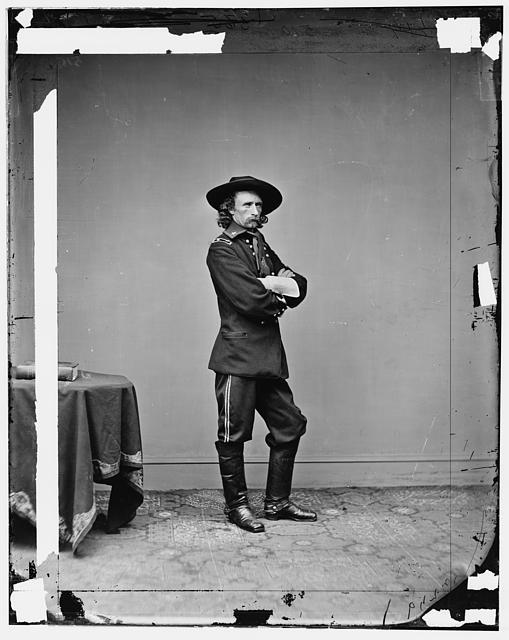
"The Michigan Brigade did not spring to life full grown. The Union army was remarkably slow to appreciate the value of cavalry; not until after the battle of First Bull Run did it seriously recruit horse soldiers. Michigan was one of the first states to answer the call, and by the end of September 1861 the 1st Michigan had been formed and sent to Virginia. But that regiment was filled with campaign-hardened veterans before the 5th, 6th, and 7th Michigan were organized in summer 1862. Not until March 1863 were those three regiments formed into a brigade, and it would be June before the 1st Michigan completed the quartet.
That was when Custer entered the picture. Custer took command of the brigade--the first cavalry brigade in the Union army to be composed of regiments from the same state--on the eve of the Gettysburg campaign. All four regiments had earned respectable reputations before his arrival, but under the leadership of Custer, who had spent a good portion of his youth in Michigan, the brigade became one of the most heralded cavalry units in the Union army."
-Daniel E. Sutherland