Injured
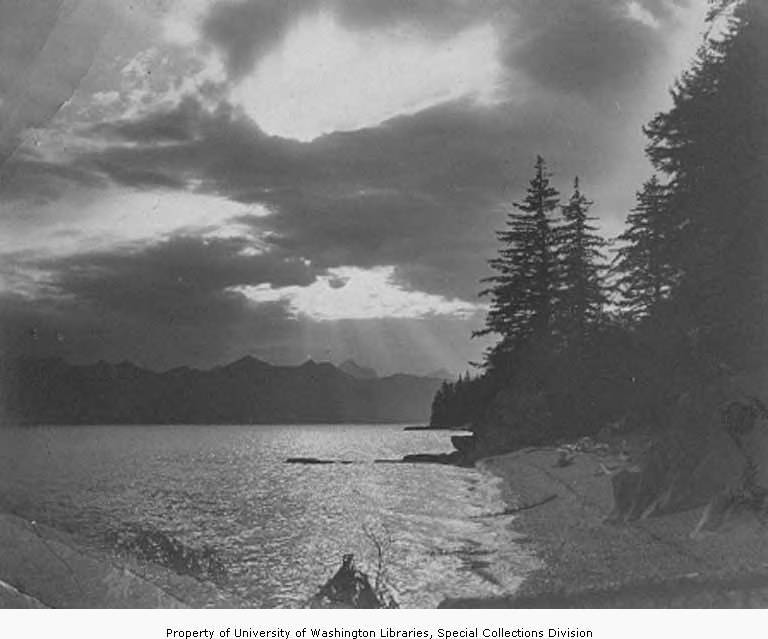
On October 15, 1899, near the head of Rodman Bay, 50 miles north of Sitka, injured himself. Seperated from the two companions during a severe storm, he had to try to launch a heavy boat from where the high tide had left it on the beach. He reported that as he pushed the boat, "the stern struck against a rock, thus letting the weight of my body strike against the sharp bow, with considerable force. The contact was at the lower part of the abdomen, on the right side, close to the groin." His two companions confirmed simply that "he was ruptured by heaving, lifting and dragging" the boat.
Although Flower reported that the "injury was quite painful" he did not seek out a physician for several weeks. In fact, a month after the accident, Flower applied for an increased pension and made no mention of an injury suffered at Rodman Bay. Instead, he applied on the basis of heart troubles that he said had become "more pronounced for the last two years probably by reason of my change of occupation from a studio to the goldfields of Alaska," and was worse at high altitude, and an aggravation of his hip injury in "low or damp atmosphere." In June 1900 that application was rejected on the grounds that the heart condition was not a rateable disability - that it rated less than 1/2 disabled -- and that he was receiving the maximum allowable for his leg injury.
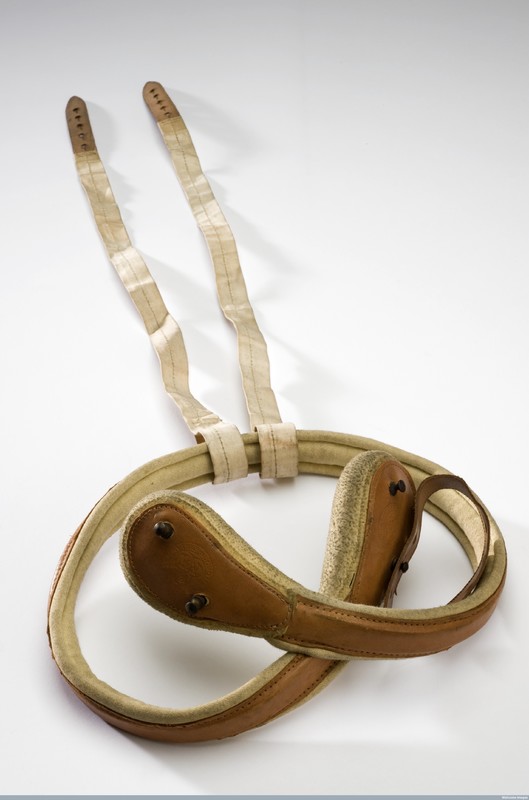
Not long after making the pension application, Flower sought treatment from Henry Fitts, a naval surgeon based at Sitka, who diagnosed a hernia. Subsequently Flower wore a truss, which Fitts reported supported the veteran's hernia "fairly well, but he has to be extremely careful to avoid lifting, straining or any hard work or sudden exertion."
It was at this time, struggling with a hernia and worsening heart condition, that Flower tried his luck on the goldfields of Nome.
In December 1900, Flower applied again for a pension increase, on this occasion citing the accident he had suffered the year before. It could be that his time in Nome had aggravated the hernia. Henry Fitts provided an affidavit that judged Flower to be 1/2 disabled for manual labor. It appears to have taken until January 1902 for Flower to get a medical examination, which approved him for a pension based on his hernia. However, that approval did not deliver Flower any additional income: the Bureau determind that the hernia warranted only a pension of $6 a month, the rate he was already receiving.
Undeterred, within a month of that decision, in June 1902, Flower applied again for a pension increase on the basis of his hernia, adding on this occasion that he suffered from deafness. An examination took place more quickly, in November 1902, and, although the Bureau rejected the claim of deafness, in May 1903 it did increase his pension for the leg injury and hernia to $8 a month.
A new pension law in 1907 delivered Flower another increase, introducing a service pension for all veterans sixty-two years of age and older who had served at least 90 days. Under the new law, Flower's pension increased to $12 a month.