
Failing Health
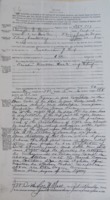
In the late 1880s and 1890s, Consider Flower's health continued to deteriorate. He regularly sought increases in his pension, initially because the condition of his leg worsened, and he developed sciatica (pain along the length of the sciatic nerve running from the lower back down the leg). By 1898 he was suffering from heart disease.
Such disabilities were much more common among veterans than the physical disabilities of arms and legs lost to amputation that were more visible and clearly attributed to the war. Only in the 1890s did doctors begin to link heart disease in veterans to their wartime service. Modern studies of pension records have confirmed those diagnoses, finding that veterans were much more likely to suffer from tuberculosis, heart disease and rheumatism and dramaticlly more likely to siffer from chronic diarrhea and dysentery. Soldiers who had served in units with high casulty rates, such as Flower, were particularly likely to develop cardiac, gastrointestinal and nervous problems later in life. (James Marten, Sing Not War: The Lives of Union and Confederate ZVeterans in Gilded Age America (2012), 77, 81-82, 86-87)
Flowers efforts to gain an increase in his pension in 1888 and 1889 failed. Medical examiners did not find him more than 3/4 disabled (local phsyicians vs examining surgeons?) A change in the pension system in 1890 opened the possibility of more support for Flower and other veterans. No longer could they claim only for disabilities linked to their miiltary service; any condition that interfered with their ability to do manual labor, unless traceable to "vicious" habits such as drinking or venereal disease, was grounds for a pension. Beginning in 1890 Flower reported sciatica as well as his leg injury. Examining surgeons continued to be inconsistent in their assessments not only of Flower's leg injury but also his sciatica: a panel found no disability in his leg in 1890, a rating of 8/18 disabled in 1892, 4/18 in 1895 in Binghamton, NY, 12/18 in Denver in 1898. In the case of the sciatica, a panel rated it 8/18, found no disability in 1892, 2/18 in 1895, 6/18 in 1898. The examination in 1898 also found evidence of heart disease for the first time, giving Flower a rating of 10/18 for an enlarged heart. With those ratings, none of those examinations found grounds to increase Flower's pension.
Notwithstanding his failing health, Flower was examined in Denver in 1898 because, at age 56 years, he was enroute to the Alaska goldfields.