
Re-enlistment
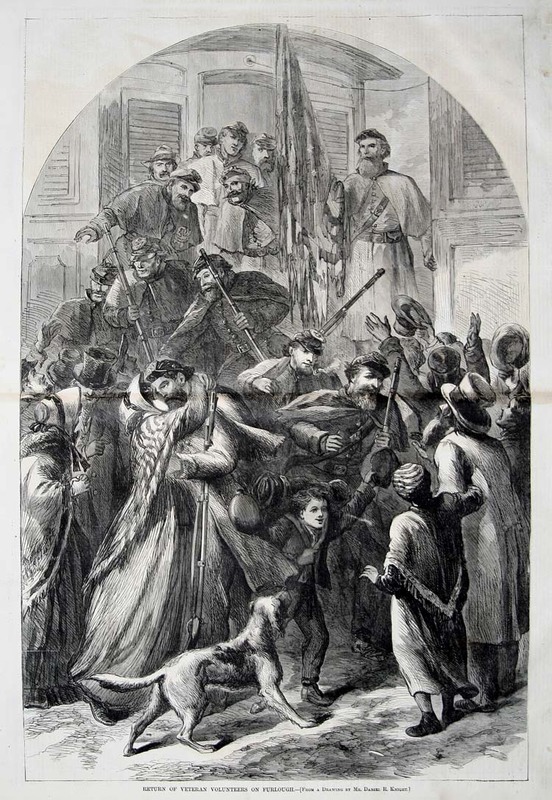
Toward the end of 1863, as Consider Flower and his comrades entered the final year of the three-year terms of service for which they had enlisted, the Federal government took action to retain those experienced soldiers. If those men had returned home, the army would have suffered a dramatic drop in strength.
To encourage reenlistment for another 3 years, the government offered each soldier a cash bounty of $402, and free transportation home for a thirty day furlough. If three-quarters of the unit reenlisted, it would remain in service as a veteran regiment, with special chevrons.
Soldiers had to make a decision on this offer more than six months before their service ended. For units like the First Michigan Cavalry, accepting meant an opportunity to go home in the winter, before the next season of campaign. Rejecting the offer meant returning to battle, and the possibility of death, without having seen their family.
Many units had meetings to discuss mass reenlistments, motivated by a desire to stay with their friends and neighbors and a commitment to seeing the war through, as well as to collect the bounty. Others felt that they had done their duty, that were men at home who had not served. Eventually, 136,507 veterans reenlisted.
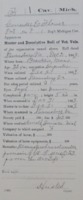
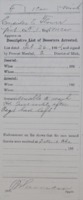
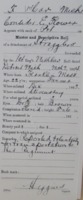
Flower was one of the 370 men from the First Michigan Cavalry who accepted the inducements and re-enlisted for another 3 years, sufficient for the unit to gain the status of Veteran Volunteer Regiment. The unit mustered out and reenlisted at Stevensburg, Virginia, on December 21, 1863, then set out for Detroit. The 30 days started once they arrived home.
A recruitment drive was mounted during this time, to bring the regiment back to full strength. By the time the veterans returned to Camp Stoneman in March 1864, the unit would number nearly 1000 men.
Consider Flower was not initially among those returning veterans. He was "unable to reach" Detroit before unit left the city in late February.
When he did arrive, the Provost Marshall recorded his name on a list of deserters, but he clearly was able to convince the military authorities that he had intended to rejoin his unit. When Flower caught up to his unit on March 3rd, he was recorded on the muster roll as a "straggler," who had "reported voluntarily for transportation to this unit."